
A Nature Reviews Neurology review from Dr. Geneviève Bernard's lab points to one molecular process that keeps appearing in leukodystrophies.
Source: The Institute
October 2, 2026
When Alexandra Chapleau walked into Dr. Geneviève Bernard's lab in 2018 as a summer undergraduate student, unsure whether research was for her, she was inspired by her brother, who has leukodystrophy. It was what initially drew her to Dr. Bernard's lab at The Institute in the Child Health and Human Development program.
While his condition is different from the specific leukodystrophies studied in their laboratory, her family's experience shaped her commitment to advancing our understanding of these disorders. Eight years later, she has completed a PhD there, started medical school, and co-authored a review that reframes how scientists think about an entire family of brain diseases.
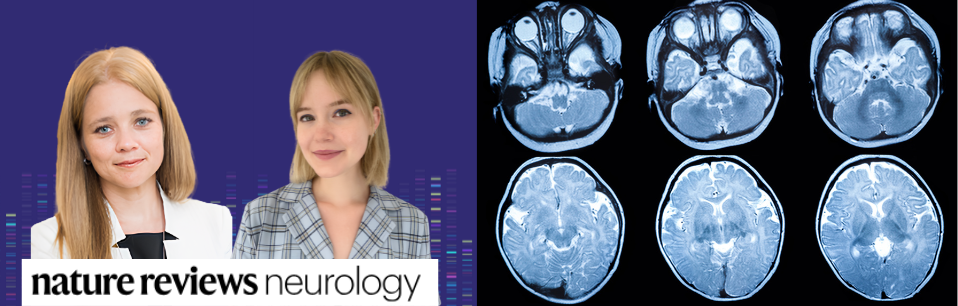
Leukodystrophies are neurological disorders that affect the white matter, or myelin, in the brain. Myelin wraps nerve fibers much as plastic sheathing wraps a wire, and for decades researchers assumed that when it failed, the fault lay in myelin itself: broken versions of the proteins that build and maintain the sheath, or proteins with specialized jobs in the central nervous system.
Over the past decade, that picture has come apart. Researchers have linked a growing number of white matter disorders to something much further upstream, in the cellular machinery that manufactures proteins in the first place. Transcription copies the instructions held in DNA. RNA processing edits them. Translation builds the protein. Disrupt any of those steps and, for reasons nobody yet fully understands, white matter suffers first.
In a review recently published in Nature Reviews Neurology, Drs. Bernard, Chapleau, and Felipe Villa Tobón gather these conditions under a single name: leuko-proteinogenesis disorders. Dr. Bernard's group helped identify several of them, including the POLR3-related, LSM7-related, EPRS1-related and VARS1-related leukodystrophies. The question driving the review was whether studying them together could reveal what studying them one at a time could not.
It could. Picture protein production as an assembly line. Enzymes called aminoacyl tRNA synthetases work partway along it, each loading one specific amino acid onto the vehicle that delivers it to the assembly site. Many of these enzymes do not work alone. They cluster into large structures such as the RNA polymerase III and the multi-tRNA synthetase complexes.
These complexes are important for transcription (DNA to RNA) in case of the RNA polymerase III, and translation (RNA to proteins). When they don’t work properly, myelin does not form properly during development of the brain. In other words, they matter to myelin development in a way nobody had appreciated before.
Writing this manuscript required tedious work. The team combed through every published report and brain MRI description it could find, many describing only a handful of patients, using terminology that has been sometimes inconsistent from one paper to the next. Dr. Bernard, together with Dr. Villa Tobón, a neurogenetics fellow with the group and now an adult neurologist in Colombia, brought the clinical judgment needed to classify each disorder correctly.
Why does it matter? Each of these disorders is rare, and rare disease research is chronically short of both patients and resources. If several conditions turn out to share a mechanism, one treatment strategy may reach several of them at once.
That is the ambition. Dr. Bernard's group wants to understand why the cells responsible for making myelin are so vulnerable when protein production breaks down, then use that knowledge to restore production or shield those cells from harm.
For families still searching for a diagnosis, for clinicians trying to recognize disorders they may encounter once in a career, and for researchers working on understanding these essential cellular processes and the associated disease mechanisms, a shared framework is somewhere to start.
Source: Chapleau A, Villa Tobón F, Bernard G. White matter disorders at the intersection of transcription, RNA processing and translation. Nat Rev Neurol. 2026 Aug 3. doi: 10.1038/s41582-026-01248-1. Epub ahead of print. PMID: 42547549.