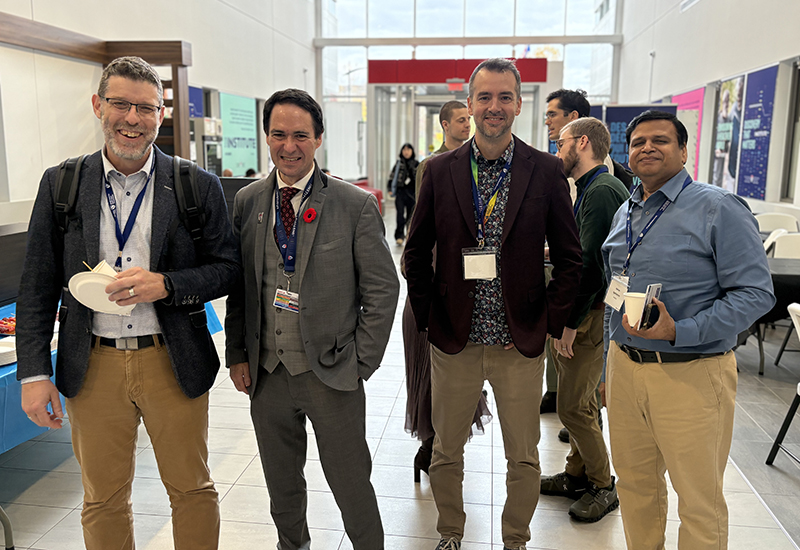
Two-day event explores how data science and technology are transforming health research and clinical care
Source: The Institute
November 17, 2025
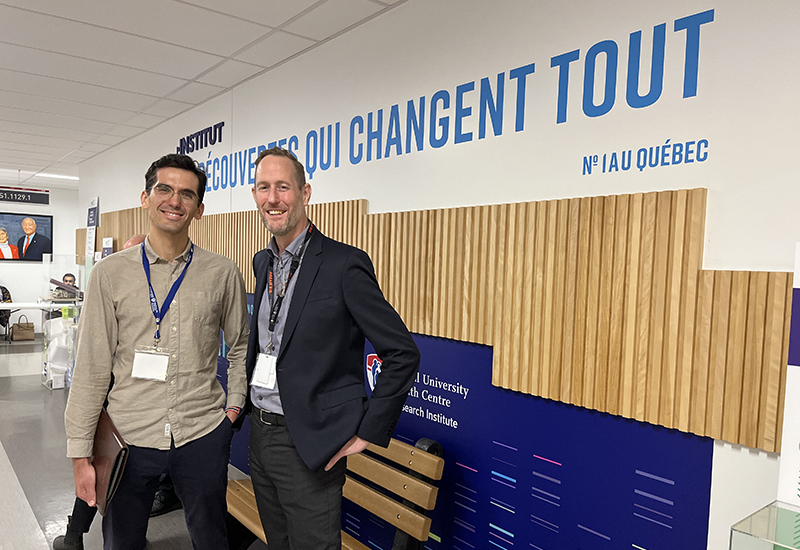
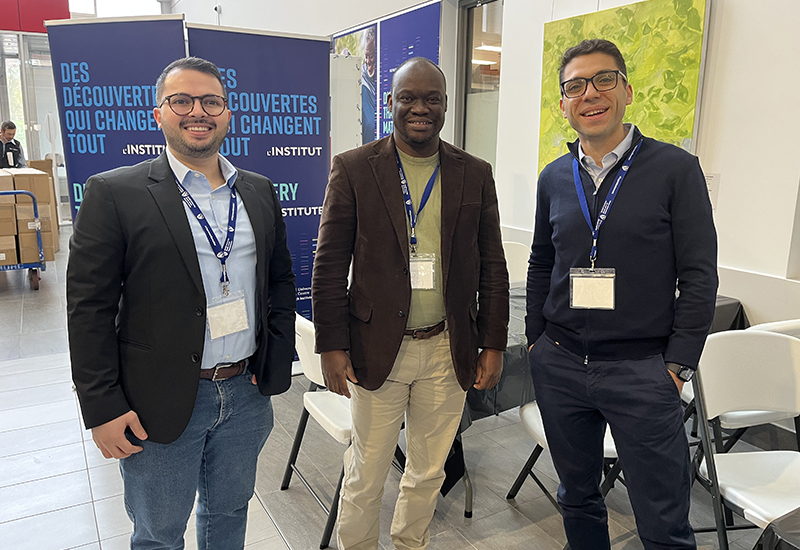
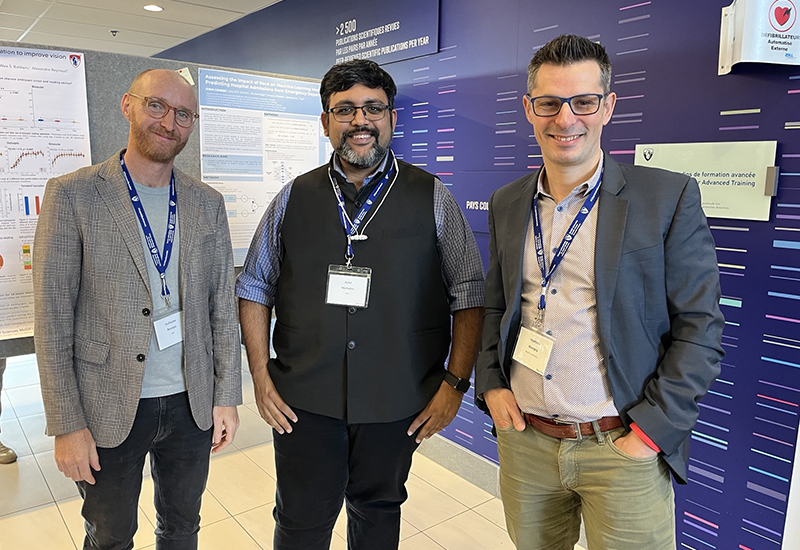
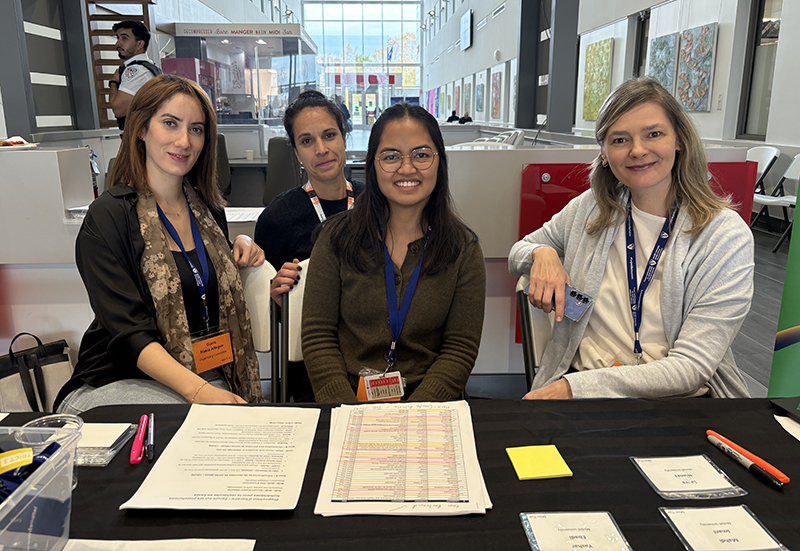
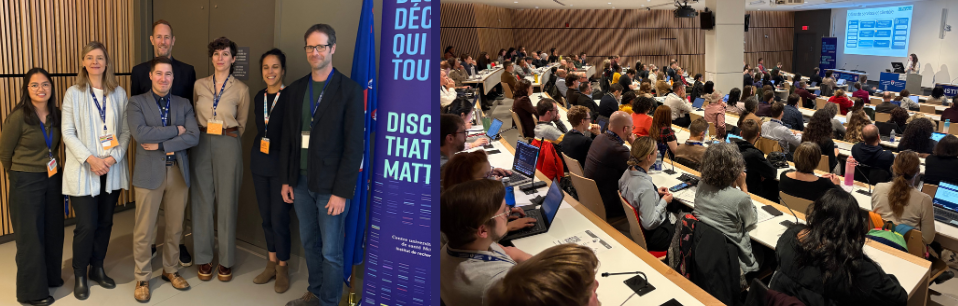
The Research Institute of the McGill University Health Centre (The Institute) hosted the Digital Health Symposium: From Research Infrastructure to Clinical Care, featuring two days of presentations, panel discussions, workshops and networking opportunities exploring the intersection of data science, technology and healthcare innovation.
Co-organized by The Institute's Centre for Outcomes Research and Evaluation (CORE), the Réseau santé numérique (RSN), the D2R-HeDS platform (From DNA to RNA–HeDS), SecureData4Health (SD4H) and the Canadian Centre for Computational Genomics (C3G) and sponsored by Amazon Web Services (AWS), the sold-out event brought together researchers, clinicians, digital platform developers, infrastructure leaders and trainees from across Québec and beyond.
Building the foundations for digital health
The first day focused on the digital backbone of health research — infrastructures, shared services and data platforms that support scientific discovery and clinical innovation. Presentations from leading Québec institutions — including the Centre hospitalier de l'Université de Montréal's CITADEL, CHU Sainte-Justine's UnIC, the CHU de Québec–Université Laval's SCIENTA and major platforms from the Douglas Mental Health University Institute, the Montreal Heart Institute, the Montreal Neurological Institute–Hospital, Université de Sherbrooke, the Institut universitaire de cardiologie et de pneumologie de Québec–Université Laval (IUCPQ-UL) and the Institut national de psychiatrie légale Philippe-Pinel — highlighted how data infrastructures and governance models are being developed to improve data access and enable secure collaboration with the goal of advancing clinical care, health system performance, and research.
Speakers shared lessons learned on sustainability and service delivery, emphasizing that successful digital-health research depends on robust technical and operational frameworks. Discussions also explored how platform teams are evolving from service providers into strategic partners driving research impact.
"Digital infrastructure is what allows ideas to move digital health from concept to care," explained David Buckeridge, MD, PhD, Senior Scientist at The Institute and leader of its Strategic Research Priority for Digital Health and Data Science. "We are seeing an important shift from standalone projects using limited computing resources toward coordinated digital platforms that enable researchers, clinicians and patients to work together more effectively. The goal is to make data-driven collaboration routine, not exceptional."
From infrastructure to application
The second day of the symposium turned the spotlight on applications of data science and digital technologies in health research and clinical care. Participants explored how innovations in artificial intelligence, genomics and digital platforms are moving from research to real-world practice, demonstrating the growing maturity of Québec's digital health ecosystem.
The program featured keynote presentations, a sponsor talk, panel discussions and sessions highlighting new projects from trainees and early-career researchers.
Keynote presentations included:
- Implementing AI in an Academic Medical Center — John Brownstein, MD, Harvard Medical School (moderated by David Buckeridge, MD)
- Accelerating Innovation in Genomics and Precision Medicine on AWS — Ankit Malhotra, PhD, AWS (moderated by Mathieu Bourgey, PhD)
- A Modifier-Directed Therapeutics Paradigm in Cystic Fibrosis — Lisa Strug, PhD, SickKids and University of Toronto (moderated by Guillaume Bourque, PhD)
Day 2 concluded with a forward-looking panel discussion, "What's Next for Digital Health Research? Bold Ideas for the Next Five Years," moderated by Dr. Buckeridge. Panelists examined opportunities and challenges in scaling data-driven health research, from governance and ethics to interoperability and workforce development.
Looking ahead
Across both days, one message resonated clearly: progress in digital health depends on collaboration. By linking infrastructures, expertise and clinical insight, researchers are transforming how data and technology support care. The event reflects The Institute's priorities of fostering innovation, building strong partnerships and translating research into meaningful improvements for patients and health systems.
"Events like this remind us why collaboration matters," said Dr. Buckeridge. "When we bring together people who build data systems, those who use them and those who benefit from them, we accelerate discovery and improve care."
Acknowledgements
The Institute thanks all speakers, moderators, trainees and partners who made the symposium a success, as well as Amazon Web Services for its sponsorship and ongoing collaboration in digital innovation. Special thanks are extended to the organizing partners — the Centre for Outcomes Research and Evaluation (CORE), the Réseau santé numérique (RSN), D2R-HeDS, SD4H and C3G — for their leadership in bringing this initiative to life.
Related news
The FRQ Digital Health Network is launched at The Institute
RI-MUHC successes in Networks funding from the FRQ-S