
Livia Garzia and team uncover epigenetic drivers of bone cancer that that may help refine prognosis and guide new therapeutic options for chemoresistant tumours
SOURCE: The Research Institute of the McGill University Health Centre
September 15, 2025
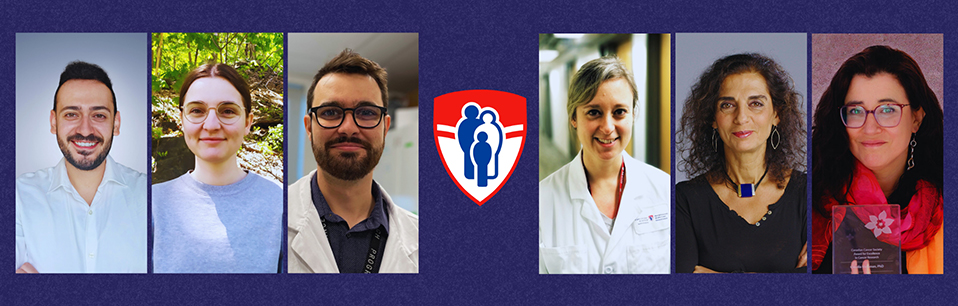
Researchers led by Livia Garzia, PhD, Nada Jabado, MD, PhD, scientists at The Research Institute of the McGill University Health Centre (The Institute) and Claudia Kleinman, PhD, from the Lady Davis Institute for Medical Research (LDI), have uncovered new molecular features of osteosarcoma, the most prevalent bone cancer that mainly affects children and adolescents. Published in Nature Communications, the study identifies new disease mechanisms central to osteosarcoma biology and suggests new therapeutic avenues to explore.
A new window into osteosarcoma
Osteosarcoma is the most common bone cancer, mainly affecting children and adolescents. Survival rates have not improved since the 1990s. Standard chemotherapy and surgery helps patients but many tumours relapse or become resistant to treatment.
One challenge is that osteosarcomas have unstable genomes with complex rearrangements, making it difficult to identify clear therapeutic targets. Prof. Garzia's team approached the problem from a different angle, focusing on the epigenome—the chemical modifications that regulate gene expression.
Their study reveals that epigenetic dysregulation is a frequent and important feature of osteosarcoma. In particular, they show that the protein EZHIP acts as an oncogene, promoting tumour aggressiveness. This is the first study in any cancer type to provide experimental proof of EZHIP's oncogenic role, opening new avenues for understanding and treating refractory osteosarcoma.
The path to discovery
The team assembled a cohort of high-grade patient tumours from hospitals in Montreal and screened for abnormal expression of oncohistones (cancer-causing histone mutants) and the recently identified oncohistone mimic EZHIP. They found that EZHIP expression and/or loss of the repressive histone mark H3K27me3 occurs in about 40% of tumours.
This result is clinically significant, as H3K27me3 loss was particularly enriched in chemoresistant relapses and metastases, where new treatment options are most urgently needed.
"New therapies for osteosarcoma are urgently needed, as patient survival rates have remained stagnant for the past 35 years. Current treatment protocols still rely on high-dose, toxic chemotherapy, which we hope to change through our research," says Wajih Jawhar, lead author and a PhD candidate co-supervised by Prof. Garzia and Dr. Jabado.
"It was a true collaborative effort among co-first authors with Geoffroy Danieau, PhD (supervised by Prof. Garzia), and Alva Annett, PhD candidate (co-supervised by Drs. Kleinman and Jabado), contributing their unique and diverse expertise in sarcoma biology and 'omics," adds Prof. Garzia.
Looking ahead
The study shows that a subset of osteosarcomas display stalled cellular development and using patient-derived cell lines and mesenchymal stromal cells, the researchers demonstrated that EZHIP expression compromises normal differentiation and activates early progenitor programs. Stem-like features are a common hallmark of aggressive cancers and deserve further investigation in osteosarcoma.
Importantly, the team also identified a potential therapeutic strategy: Tazemetostat, an FDA-approved drug with a favourable safety profile, showed promise in cellular models with EZHIP expression. While more work is needed before clinical application, these findings represent an important step toward new treatment options.
By combining advanced technologies with clinical insight, Prof. Garzia's group has revealed new molecular mechanisms of osteosarcoma. Their findings not only deepen understanding of this difficult-to-treat cancer but also point to strategies for more effective and less toxic therapies.
About the paper
Aberrant EZHIP expression drives tumorigenesis in osteosarcoma, was authored by Wajih Jawhar, Geoffroy Danieau, Alva Annett, Takeaki Ishii, Andrea Bajic, Ana Castillo-Orozco, Brian Krug, Yara Faucher-Jabado, Justin Seyedmoomenkashi, Mostafa Saquib, Masoumeh Aghababazadeh, Marjan Khatami, Nadim Tawil, Damien Faury, Sungmi Jung, Ahmed Aoude, Robert E. Turcotte, Benjamin Ellezam, Thomas Sontag, Sylvie Langlois, Daniel Sinnett, Swneke D. Bailey, Lingxin Zhang, Dorothée Dal Soglio, Claudia L. Kleinman, Nada Jabado and Livia Garzia
Nature Communications volume 16, Article number: 6752 (2025)
DOI : https://doi.org/10.1038/s41467-025-61558-8
Related news
RI-MUHC scientist receives Terry Fox funding to study metastatic sarcomas