
MISI Project fosters mentorship, training, and community-focused research at The Institute
Source: The Research Institute of the McGill University Health Centre (The Institute)
September 26, 2025
September 30, the National Day for Truth and Reconciliation, acknowledges the legacy of residential schools and their ongoing impact on Indigenous communities. At The Institute, this commitment includes the MISI Project (Integral Mentorship for Inclusive Science) which supports Indigenous students in health research through scholarships, mentorship and training. This summer, two Indigenous trainees joined the program. Indigenous peoples represent about 5% of Canada's population but account for less than 1% of physicians and only 3.4% of students enrolled in biological sciences, highlighting the ongoing underrepresentation of Indigenous people in medical and scientific fields.
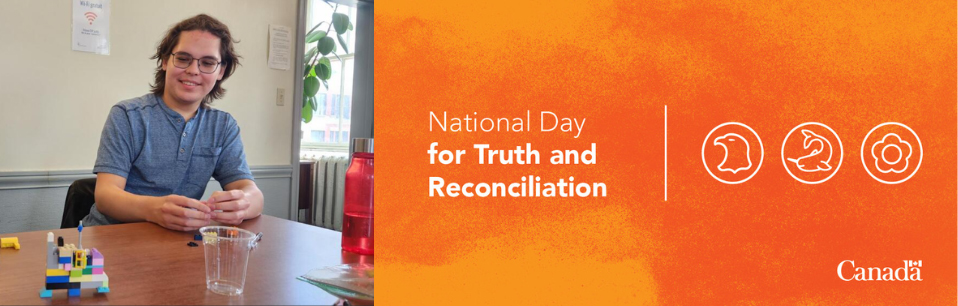
Launched with funding from the Quebec Ministry of Economy, Innovation and Energy, MISI focuses on creating opportunities for underrepresented groups in health research with particular emphasis on Indigenous students and women. The program combines scholarships with mentorship and leadership training, helping trainees build research skills while fostering inclusive science practices.
One of this year's Indigenous awardees is Kane Phillips, a member of the Kanien'kehà:ka (Mohawk) Nation of Kahnawà:ke and a social sciences and psychology student at John Abbott College. He sees his field as a way to strengthen community health: Indigenous communities require support in addressing mental health and cultural revival, and I aim to help ensure their perspectives are considered he explained.
Kane Phillips worked with Anne Almey in the lab of Simon Ducharme, MD, associate investigator in the Brain Repair and Integrative Neuroscience Program. Anne explained: "His main task was to develop a dashboard to provide participants with personalized feedback by comparing their results to normative data, as a way of thanking them for their contribution." Kane also carried out data cleaning, statistical analysis, and built user-friendly visuals showing patient partners how their contributions fit into a larger scientific effort.
Drawing on his experience and what he learned at the MISI summer school, Kane emphasized the need for strong ethical practices in science: "History shows that science has not always been ethical, especially for Indigenous and other marginalized groups. This experience reminded me of the importance of strong ethical standards in research."
Truth and Reconciliation calls on institutions to act. By supporting Indigenous trainees through mentorship projects such as MISI and other research projects, The Institute is taking steps to ensure research reflects community needs and contributes to Truth and Reconciliation. As part of this commitment, The Institute recognizes the contributions of Kane Phillips and other Indigenous trainees while continues to foster opportunities for Indigenous researchers and for meaningful and respectful collaborations with Indigenous people in health sciences.
Related news