
New funding supports Indigenous-led engagement to advance HIV and STBBI wellness
SOURCE: The Institute
August 21, 2025
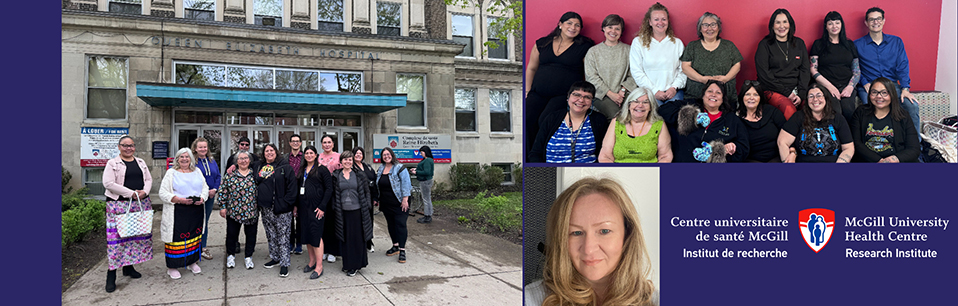
In May, a group of Indigenous women gathered at The Institute's Centre for Outcomes Research and Evaluation (CORE) for a powerful roundtable to share wisdom, ceremony and lived experiences in support of HIV and sexually transmitted and blood-borne infection (STBBI) prevention and treatment. Guided by respect, resurgence and relational accountability, participants emphasized Indigenous-led, land-based and culturally rooted approaches to health and research.
The gathering also marked the launch of new research funding for Carrie Martin, an investigator in the Infectious Diseases and Immunity in Global Health (IDIGH) Program at The Institute, whose work centres Indigenous voices and priorities to strengthen both community wellness and scientific impact.
New grant: centering Indigenous priorities
Carrie Martin's CIHR-funded project addresses the disproportionate rates of HIV and STBBIs among First Nations, Inuit and Métis peoples and the lack of research centred on Indigenous peoples' lived experiences. It aims to strengthen Indigenous research through self-determination—empowering those with lived experience to set priorities, conduct research according to their cultures and knowledge systems, and apply findings in ways that work for their communities.
Three objectives guide the work:
- Share knowledge between regions to identify common priorities and mutual goals
- Create a formal set of recommendations on Indigenous-led HIV and STBBI research directions
- Assign roles within the project's Indigenous Guidance Circle to advance priorities and develop fundable projects
Event: bringing voices together
The two day gathering brought together researchers, community members, health providers and people with lived or living experience of HIV and STBBIs. The event included a visit to the Indigenous Health Centre of Tiohtià:ke (Quebec).
Through ceremony, dialogue and collaborative planning, participants set priorities that will inform innovative trials and network-wide knowledge mobilization initiatives that embrace Indigenous Ways of Knowing and Doing. These women's voices help to ensure culturally grounded approaches that are socially relevant, sustainable and timely.
Impact and collaborators
The knowledge shared will help develop a flexible, Indigenous-led care model that centres culture, readiness and ceremony—ultimately improving HIV and STBBI prevention and treatment for populations at greatest risk.
The project team includes Indigenous and allied researchers such as Claudette Cardinal (BC Centre for Excellence in HIV/AIDS), Dessie Jo Sutherland (Willow Cree Health Services), Noreen Reed (First Nations Health Facility), Sylvian Beaudry (STBBI outreach worker), Renee Masching (community-based researcher) and facilitator Jaydee Cossar. Allied scholar Dr. Trevor Hart (Toronto Metropolitan University) also participated, linking the work to the CTN+ Prevention and Testing Think Tank.
A continuation of decades-long work
Carrie Martin, a Ph.D. candidate with over 25 years' experience in Indigenous women's health and HIV, is Executive Director of the Indigenous Health Centre of Tiohtià:ke in Montreal and CTN+ Lead for the Indigenous Guidance Circle. Her research focuses on reducing barriers to healthcare, improving outcomes and advancing health equity for Indigenous peoples living with HIV, particularly women-identified individuals.
Recently, she joined leading Indigenous HIV researchers from seven countries at a summit in Rome on the sexual and reproductive health rights of Indigenous women living with HIV. Delegates shared findings on the barriers these women face in accessing HIV testing and treatment, and issued a joint call for sustained global funding to prevent a reversal of hard-won gains.
Martin's work has been widely published, including recent contributions to the Journal of the International Association of Providers of AIDS Care, the International Indigenous Policy Journal and the International Journal of Indigenous Health.
Why this work matters
Unlike past approaches that have been extractive, this project ensures reciprocity, agency and cross-community collaboration. By bridging Indigenous knowledge systems with Western research, the team aims to create models that are both culturally resonant and scientifically robust—offering a path toward equitable, community-driven HIV and STBBI care.
- Learn more about the Indigenous Health Centre of Tiohtià:ke: ihct.ca
- Learn more about the CTN+: ctnplus.ca
Related news
Promoting inclusivity of Indigenous communities in research
Romina Pace: Bringing healthcare closer to home in Kahnawá:ke
An invitation to innovation for Indigenous neuroscience students