
Valuing abilities: Eight interns with disabilities and their host teams build a more inclusive Institute
Source: The Institute
August 26, 2026
Ariane Richard-Massé is one of the interns living with disabilities who joined The Institute in 2026. Ariane's internship placement took place in the Animal Resources Division (ARD), where she conducted animal health checks, cage enrichment, feeding and medication administration. Over time, she worked more independently on enrichment and direct animal care.
Ariane's internship demonstrated how a strengths-based approach can benefit both interns and host teams. "Once we identified her strengths, we adapted her tasks accordingly. She became a real asset in those activities," explained Caroline Lebrun and Didace Massengo, technical coordinators who acted as Ariane's supervisors. Brian Gulbrandsen, Animal Care Worker, echoed this perspective: "It comes down to understanding people's abilities and what they enjoy doing. If you match the work to their strengths, they'll do well."
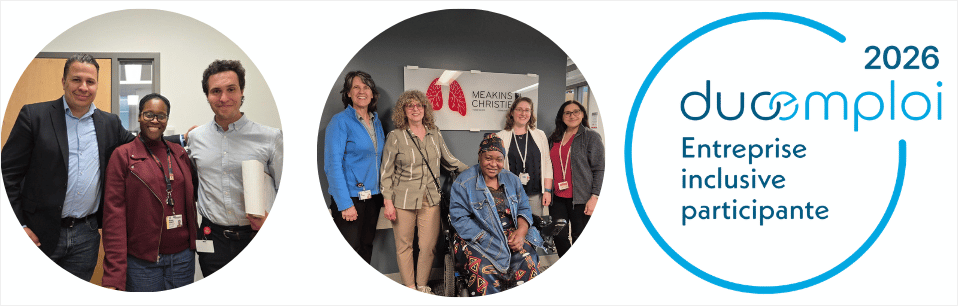
The People & Culture division's Equity, Diversity and Inclusion (EDI) team has led the recruitment of eight interns living with disabilities through its partnerships with specialized organizations such as Giant Steps, Aim Croit and the SDEM SEMO and The Institute's participation in the DuoEmploi and MentorHabiletés programs. These internships result from The Institute's Career and Opportunities Fair for People with Disabilities held in October 2025.
In addition to the ARD, interns collaborated with the Centre for Innovative Medicine (CIM), the Desjardins Center for Advanced Training (DCAT), the Environmental Health and Safety (EHS) team, the People & Culture Division, the Finance Division, and the CHHD and RESP research programs. They contributed to operational and research-related work while exploring new career pathways. This article highlights lessons learned and guides teams interested in recruiting and supporting people with disabilities.
In Ariane's experience, exposure to research environments stimulated her creative scientific thinking. Beyond assigned tasks, she shared ideas about creating a "micro-zoo to study bacteria and viruses and a medicinal botanical garden to learn about phytotherapy." Simple accommodations provided at the ARD, such as breaks when she experienced fatigue and flexibility with arrival times contributed to the success of Ariane's internship.
"What surprised me most was her knowledge and how much she enjoyed talking about science," said Anna Choy (ARD Manager).
Similarly, Joshua Ejdelman, manager at the ARD, noted, "She was so interested in the topic that some days, she had done research before coming in."
At the CIM, Earl Benoire's role evolved from data entry support to building a centralized database. He consolidated research information previously spread across multiple Excel files. Supervised by Irina Uscatescu and Luan Tran, Clinical research supervisors, Earl autonomously developed a functioning system.
"I really enjoyed creating something impactful for the CIM. I am proud of it and I know it will stay with the team even after my internship," Earl said. He encouraged candidates with disabilities to apply at The Institute: "At The Institute, they look at your skills first. I had a skill, I showed it to them and that's all they needed to know. They made sure I had everything I needed to use that skill comfortably," he said.
Irina Uscatescu described how the experience changed her expectations: "Earl did a lot on his own. I tried to be overprotective at first, but he was able to do everything by himself. It was a learning opportunity for me —he can do more than I thought." The experience changed how she approaches inclusion: "We cannot define a person based on their disabilities. Uncertainty about hiring people with disabilities is often based on assumptions rather than experience."
A Fourth Participation in the DuoEmploi Program
Although shorter, the one-day DuoEmploi internships also provided valuable learning opportunities for both interns and host teams. Through DuoEmploi, Mohamed Silimi joined the EHS team with EHS Officers Micheline Alexandre and David Sanchez. On June 1, Mohamed participated in laboratory inspections, biosafety assessments, chemical waste management, and safety inspections of hazardous material storage tanks and associated equipment. He observed how preventive inspections, regulatory compliance, and risk assessments work together to protect researchers, support laboratory operations, and maintain a safe research environment.
David highlighted Mohamed's curiosity and engagement throughout the day, particularly his interest in understanding how EHS integrates safety, environmental protection, and regulatory compliance into everyday research activities.
On June 5, in the RESP Research Program, Eveline-Claire Nguepi toured laboratories and met with researchers and trainees. She also helped organize a research seminar alongside Maria Makroyanni and Jacqueline Brown, Administrative Assistants; Linda Karpowicz, Program Assistant; Séverine Audusseau, Laboratory Coordinator; and Mellissa Gaudet, Living Lab Manager.
"I was in front of world-class researchers and welcomed by a beautiful and warm team focused on my potential and not on my disability," Eveline said. "What struck me most was Eveline's motivation to learn and contribute," said Inga Murawski, RESP Program Manager.
During the day, Eveline met a colleague of the ARD who is also a wheelchair user and joined The Institute following a DuoEmploi internship. "Meeting a colleague with a similar experience helped me feel that health research institutions can be a professional space for me," she said. The Institute has participated in the DuoEmploi program for four years and two interns later joined as employees. As in previous years, this program helped participant teams better understand disability inclusion and adopt practices that recognize and build on people's skills and strengths.
In conversation with the EDI team, the hosting teams highlighted interns' curiosity, strong preparation, and ability to contribute quickly and independently. Many interns exceeded initial expectations, host teams said. These experiences demonstrate that direct exposure to people with disabilities can challenge assumptions and help teams recognize the value that they bring to research and administration.
The Institute sincerely thanks all the interns of this program — Ariane Richard-Massé, Earl Benoire, Eveline-Claire Nguepi, Mohamed Silimi, Moriké Kaloka, Neda Oghbaei, Grace Carmen Gahou and Ying Wen — for their valuable contributions. We also extend our gratitude to the supervisors, colleagues and partner organizations who make these internships possible. Drawing on these experiences, The Institute will continue to strengthen inclusive recruitment practices and create more accessible research and administrative environments.
The partner organizations mentioned and the EDI team can support The Institute teams in recruiting people with disabilities or offering them accommodation. Resources on inclusive recruitment and retention practices are presented in The Institute's guides The Strength of the Spectrum and Challenging Barriers: Recruiting and Retaining People with Disabilities. Programs such as Sphère Québec's EHA initiative for students with disabilities and APMT for non-student employees can also provide wage subsidies and support for workplace accommodations. For more information, write to edi.ri@muhc.mcgill.ca