
A grant from Breakthrough T1D, a global Type 1 diabetes research organization, will support a clinical trial testing whether adding tirzepatide can simplify automated insulin delivery while maintaining glucose control
SOURCE: Research Institute of the McGill University Health Centre (The Institute)
February 12, 2026
Managing blood sugar after meals remains one of the most demanding parts of daily life for people living with Type 1 diabetes — even for those using automated insulin delivery systems. New research led by Ahmad Haidar, PhD, aims to test whether adding tirzepatide, a medication that slows digestion, could reduce the need for manual mealtime insulin dosing while maintaining effective glucose control.
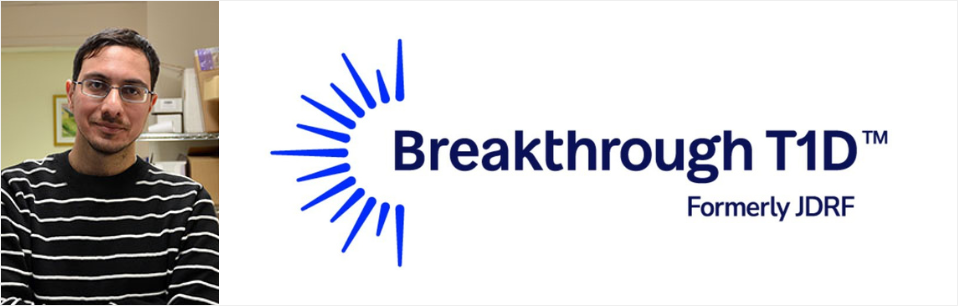
Ahmad Haidar, PhD, a scientist in the Metabolic Disorders and Complications Program at The Institute and Associate Professor in the Department of Biomedical Engineering at McGill University’s Faculty of Medicine and Health Sciences, has received new funding to conduct a clinical trial examining whether tirzepatide can make automated insulin delivery systems easier to use without compromising safety or performance.
The project is co-led by Melissa-Rosina Pasqua, MD, PhD (principal investigator), Michael Tsoukas, MD, Natasha Garfield, MD, and Abhinav Sharma, MD, PhD, and is supported by a grant from Breakthrough T1D, a global organization that funds Type 1 diabetes research. The award provides funding of up to US$1.9 million for the period July 1, 2025 to June 30, 2028.
Tirzepatide is currently approved by Health Canada for use in Type 2 diabetes and weight management, but has not yet been approved for Type 1 diabetes.
Ahmad Haidar, PhD, notes that tirzepatide may help support more stable glucose control by affecting how quickly glucose rises after meals. “Because tirzepatide changes how quickly glucose enters the bloodstream, it may give automated insulin systems more time to respond and keep glucose levels in range — without the added burden of carbohydrate counting.”
The study will involve 105 adults using the Tandem Control-IQ technology, a commercial automated insulin delivery system. In the first part of the trial, all participants will use the pump in its hybrid mode, which still requires users to give insulin bolus doses before meals. In the final weeks, participants taking tirzepatide will switch to a fully automated (“closed loop”) mode, where the system manages insulin delivery without manual meal boluses.
This is a multicentre project conducted in collaboration with the Institut de recherches cliniques de Montréal (IRCM) (Rémi Rabasa-Lhoret, MD, PhD) and the University of Bern (Lia Bally, MD, PhD; Christoph Grani, MD, PhD; and Maricel Peters, MD, PhD).
Researchers hope that adding tirzepatide to the Control-IQ system will achieve equally effective blood sugar management without manual inputs at mealtimes. “Ultimately, the aim is to help people spend less time thinking about diabetes and more time living their lives — with safer, simpler and more consistent glucose control,” adds Ahmad Haidar, PhD.
Related news
Semaglutide—known as Ozempic—can be beneficial to people with type 1 diabetes
RI-MUHC team studies a novel, fully automated insulin delivery system