
New study by researchers at The Institute highlights the value of a One Health approach in tuberculosis research
SOURCE: The Institute
October 29, 2025
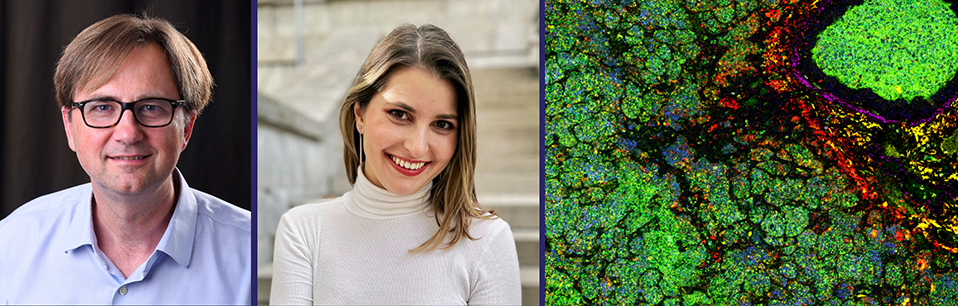
New research led by Sarah Danchuk, PhD, and Marcel Behr, MD, M.Sc., at the Research Institute of the McGill University Health Centre (The Institute) reveals for the first time that some animal strains of the bacteria causing tuberculosis (TB) are significantly more virulent than their human counterparts. Published in the journal PNAS, the study challenges a long-standing assumption that members of the Mycobacterium tuberculosis complex have the same infection outcome, regardless of the host they infect, and redefines assumptions about TB evolution and pathogenesis.
"Despite sharing over 99.9 percent of their genetic code, these bacteria don't behave the same way in infection," said Dr. Behr, principal author of the study and senior scientist in the Infectious Diseases and Immunity in Global Health (IDIGH) Program at The Institute. "Our findings show that animal-adapted strains can cause dramatically more severe disease than the human strain, underscoring the need to follow the One Health approach and study both the pathogen and its hosts together."
Comparing infection across species
The team compared three closely related bacteria: Mycobacterium tuberculosis (the main cause of human TB), M. bovis (the 'classical' cause of bovine TB), and M. orygis, a recently recognized multi-host pathogen spreading among livestock and wildlife in South Asia. Using both Holstein calves and C57BL/6 mice, the researchers observed clear "virulence hierarchies": M. orygis and M. bovis produced extensive lung and lymph-node damage, while M. tuberculosis caused milder infection. In mice, infections with the animal strains progressed far more rapidly, with severe illness developing within a few weeks, compared to several months for the human strain.
"We're used to thinking of M. tuberculosis as the 'most important' pathogen when it comes to tuberculosis," said Sarah Danchuk, the study's first author and former trainee in Dr. Behr's lab. "However, our results show that the animal strains are not attenuated versions—they're actually more virulent in their natural host and can even outpace M. tuberculosis in laboratory models."
Uncovering molecular drivers
Although the three bacteria share nearly identical genomes, the researchers found key differences in how they express certain proteins involved in infection. These variations appear to influence how severe the disease becomes. Follow-up experiments confirmed that some of these proteins play a critical role in driving the aggressive behaviour of the animal strains. The next step will be to investigate the molecular mechanisms underlying these traits and determine their relevance in both animal and human tuberculosis. This work could reveal why such closely related pathogens produce such distinct disease outcomes across species.
Interestingly, previous infection or vaccination changed how severe the disease became, showing that immune memory can alter disease outcomes. Mice that had been immunized with BCG (the only licensed vaccine for tuberculosis) or previously exposed orally to M. orygis survived far longer upon reinfection. "The finding that oral exposure is protective has important ramifications for settings where M. orygis may be found in milk and dairy products," said Dr. Behr.
The challenging five-year project brought together experts from multiple fields of tuberculosis research, including specialists across McGill University, the Vaccine and Infectious Disease Organization (VIDO), and international partners in Denmark and the United States. The study was supported by the Canadian Institutes of Health Research (CIHR) and benefited from the expertise and facilities of two state-of-the-art technology platforms at The Institute: the Containment Level-3 Laboratories and the Proteomics Platform.
"This project reminded us that science rarely follows a straight path," said Sarah Danchuk. "Each time we found one answer, we had new questions—and that's what made it exciting. A team of scientists trying to figure out the 'why' of something is what makes discovery possible."
About the study
The paper "Virulence hierarchies within the Mycobacterium tuberculosis complex" was written by Sarah N. Danchuk, Shannon C. Duffy, Jaryd Sullivan, Syed Beenish Rufai, Fiona A. McIntosh, Andréanne Lupien, Luke B. Harrison, Hojjat Ghasemi Goojani, Lorne Taylor, Yuhong Wei, Philippe Joubert, Rasmus Mortensen, Jeffrey M. Chen, Nirajan Niroula, Robin Stevens, Carla Norleen, Vivek Kapur, and Marcel A. Behr. It was published in PNAS on October 16, 2025, 122 (42) e2507104122
DOI: https://doi.org/10.1073/pnas.2507104122
Related news
New study reveals key mechanism behind natural resistance to tuberculosis
Tuberculosis: A persistent threat, yet clinical trials show promise
New Global TB Dictionary aims to standardize terminology in tuberculosis research