
EDI Advisory Committee
Mandate of the Equity, Diversity and Inclusion Advisory Committee of The Institute
The Institute's EDI Advisory Committee is a participative body, representative of the diversity of the RI-MUHC. It promotes discussion and understanding of EDI obstacles and initiatives among Institute members, and address them at the institutional level. It provides advice and recommendations on EDI matters to the Institute's management and to the Human Resources and Equity, Diversity and Inclusion Committee of the Board of Directors, and will monitor these recommendations. The EDI Advisory Committee ensures that the EDI Policy and Action Plan are implemented, measured, monitored and communicated in a manner that is inclusive, relevant, adapted and representative of the reality of its members and the institutional context.
Updated July, 2026










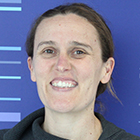
Profiles, EDI Advisory Committee
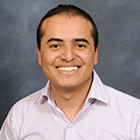
Diego Herrera, PhD, is the Equity, Diversity and Inclusion (EDI) Specialist at the Research Institute of the McGill University Health Centre (RI-MUHC). He has worked sixteen years as a researcher and practitioner with Indigenous peoples, women, displaced population, and youth affected by armed conflicts in seven countries. He worked as EDI Advisor for Research at the University of Ottawa and as program specialist at UN Women Colombia and at the Centre for International Studies and Cooperation (CECI) in Canada. He holds a PhD in intercultural communication and development.
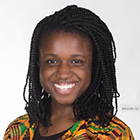
Marilyn Ahun, PhD is an Assistant Professor in the Department of Medicine and Department of Global and Public Health. Her research focuses on promoting child and youth mental health in low- and middle-income countries, particularly in her home country of Ghana. She uses qualitative and quantitative research to examine parents’ caregiving roles, their experiences of mental health problems, and how they influence child and family wellbeing outcomes. Professor Ahun is a co-founder of the McGill Black Alumni Association and co-creator of the McGill Black Mentorship Program.
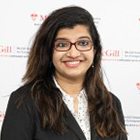
Syamala Buragadda, M.Sc. PT, PhD, is currently a postdoctoral fellow with the Inclusivity, Diversity, Equity, & Accessibility (IDEA) committee and the Accelerating Clinical Trials (ACT) consortium at McGill University. She is also a physiotherapist specializing in neurological disorders, she has been mentoring rehabilitation researchers since 2005. Her PhD from Memorial University focused on brain plasticity and heart-brain connections in Multiple Sclerosis. Syamala has published extensively, presented internationally, and received the prestigious endMS Doctoral Award. She aims to become a clinician-scientist and health policymaker with the World Health Organization. Outside of work, she enjoys exploring new cultures and the arts in St. John’s, Newfoundland, and is a mother of two.
Julia Burnier is an Assistant Professor in the Departments of Oncology and Pathology at McGill University and a Scientist at the RI-MUHC since 2018. She is a William Dawson Scholar, FRQS Junior 1 Scholar, and recipient of the Canadian Cancer Society Emerging Scholar Award. Her research program within the Cancer Research Program of the RI-MUHC aims to uncover the role and mechanisms of tumor-derived molecules in tumor progression and metastasis.
Annabel Wing-Yan Fan (she/they)
Annabel Fan is a doctoral student in the Baldwin Vision Lab at the RI-MUHC, studying how visual information processing changes with age. Her/their research employs behavioural methods using psychophysics and driving simulators to better understand how vision supports safe driving in older adults. Annabel has experience turning research into web and mobile applications and is enthusiastic about scientific mobilization. From September 2021 to 2022, Annabel oversaw the organization of the EDI committee for the BRaIN program at the Research Institute of the McGill University Health Centre's. The committee provided scholarships, academic and career counselling, and hands-on neuroscience research experience at the Montreal General Hospital to Black and Indigenous students. Additionally, the committee hosts EDI training events and scientific talks on EDI topics as part of the BRaIN seminar series.
Suleima Jacob-Tomas is a PhD student in the Integrated Program in Neuroscience (IPN) at McGill University, recipient of the FRQS Doctoral Award (2025), the FIERA EDI Academic Excellence Award (2024), and the Vanier Canada Graduate Scholarship (2021). She is affiliated with the MeDiC and BRaIN programs of The Institute. Her research explores the molecular mechanisms of aging, with the goal of promoting healthy aging and reducing the societal burden of neurodegenerative diseases. As a scientist with a mobility disability, Suleima has actively led initiatives to improve accessibility in research facilities across her previous laboratories at McGill. Suleima advocates for inclusive infrastructure in STEM and strives to create environments where all individuals can thrive in research and academia. Her dedication to equity, diversity, and inclusion is grounded in lived experience and a passion for empowering future generations in science.
Jini John is an experienced Human Resources and Business Management professional, passionate about promoting equity and inclusion. Her experience as a person living with a disability has given her a unique perspective on the hurdles faced by people with disabilities, and the solutions they need to help them succeed. Jini works as research assistant at the RI‑MUHC and is the founder and director of Accelion Human Capital Services, an enterprise providing recruitment and human resources support for clients across the state of Kerala, India.
Alexandra Kindrat, PhD, is Chair of the Brain Repair and Integrative Neuroscience (BRaIN) Program EDI committee, as well as the BRaIN Program Manager. She has specialized training in Equity, Diversity and Inclusion through McGill’s Summer Institutes in Global Health and Gender Equality, and from the University of Glasgow, as well as Indigenous programs at both UQAT and the University of Alberta. Alexandra leads the BRaIN Program Neuroscience Retreat for Black and Indigenous students and organizes the annual BRaIN Symposium featuring the Brain Bee, an inclusive neuroscience competition which allows for neuroscience to be accessible to everyone. Certified in Management and Leadership by Harvard Business School, she has been recognized by the American Institute of Aeronautics and Astronautics and the Canadian Association of Research Administrators.
Irina Kudrina MD (Kz), MD CM (Ca), M.Sc., CCFP, is a a clinician scientist, an assistant professor in the Department of Family Medicine and an associate member in the Department of Anesthesia at McGill University. Dr. Kudrina works with marginalized populations living with addictions and chronic pain, and finds the topic of equity, diversity and inclusion highly pertinent to her clinical and research work. Her scientific work focuses primarily on chronic pain, access to health services, pathophysiology and chronic toxicity of opioids and cannabinoids. She has experience working in a variety of settings in two countries and three different languages.
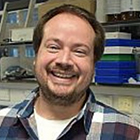
David Lessard has a PhD in Anthropology and currently works as a Research Associate at the CORE of the RI-MUHC. He worked in social research with the James Bay Cree on experiences of colonization and community empowerment. David Lessard’s current research focuses on the integration of patient and stakeholder perspectives in clinical research involving information technologies through the inclusion of qualitative methods, participatory approaches, and implementation science.
Gabrielle is a trainee in Clinical and Translational Research (MSc) majoring in Experimental Medicine. Their research interests focus on social determinants of health and explore the role of narrative medicine in clinical research. Gabrielle is also a Co-Investigator and Clinical Research Coordinator at The Institute, leading studies in chronic viral illness, metabolic disease, and hepatology. Before joining The Institute, Gabrielle received a bachelor’s degree from McGill University, majoring in Women’s Studies and minoring in sciences, and received a second bachelor’s degree (Honours) from Concordia University, majoring in Interdisciplinary Studies in Sexuality. Gabrielle is passionate about healthcare advocacy and patient empowerment, utilizing social justice frameworks and lived experience to inform their approach. Outside of work, Gabrielle is a parent, an artist, an aunt, and a volunteer in harm reduction and sexual health education at AIDS Community Care Montreal.
Augusto Montezano graduated in Pharmacy and Biochemistry from the Paulista University, Sao Paulo, Brazil in 2001 and completed his PhD (Pharmacology) in 2006, at the University of Sao Paulo. He is an active member of the hypertension scientific community as Hypertension Social Media Editor and advocates for Early Career Researchers at the executive and mentoring committees of the European Council on Cardiovascular Research, leadership committee of the AHA Council on Hypertension and the mentorship and training committee of the International Society of Hypertension.
Aurore Palanque is an Equity, Diversity, and Inclusion Advisor at The Institute, working to advance inclusive, intersectional practices across research and institutional settings. She holds a master’s degree in International and Intercultural Communication from UQAM, with a focus on feminist, queer and intersectional studies. Her past roles at TELUQ and UQAM include research and education assistant, corrector, and speaker, with work exploring online learning, semiolog and the representation of women and equity-deserving groups in Quebec media.
Before joining The Institute, Aurore led EDI initiatives within an organization promoting women’s leadership and workplace gender equity. She also volunteers with a Montreal non-profit supporting survivors of domestic violence. Her approach is grounded in a strong commitment to social justice, accessibility and systemic change, with a focus on fostering environments where diverse perspectives are valued.
Janae Palmer is the Program Assistant for the Surgical and Interventional Sciences Program at The Institute. She holds a Bachelor’s degree (Honours) in Psychology and a Graduate Certificate in Business Administration, both from Concordia University. Janae is passionate about mental health research and advocacy. She volunteered as a research assistant for the Montreal Antenatal Well-being Study (MAWS), which aims to identify factors contributing to anxiety and depression during and after pregnancy in order to better support women’s mental health. Additionally, she contributed to advocacy efforts with the Quebec Alliance for Perinatal Mental Health. Her interests include mental health, increasing research representation for minorities and racialized groups, process optimization, and the integration of visual art in science and research.
Darcy Wagner is the Canadian Excellence Research Chair in Lung Regenerative Medicine and a former Wallenberg Molecular Medicine Fellow at Lund University in Sweden. With experience across five countries and more than 80 trainees mentored from over 29 countries spanning six continents, she brings a deeply international perspective to her work in lung regenerative medicine and trainee development.
A long-standing advocate for equity in science, Wagner has led initiatives supporting underrepresented researchers across several organizations, including Lund University's WINGS initiative and the Society of Women Engineers. Since joining McGill in 2024, she serves on the McGill Regenerative Medicine Network Executive Committee and the Canadian Stem Cell Network's Research Management Committee. Within her laboratory, she builds individualized training programs and custom digital tools designed to support trainees from diverse cultural, linguistic, and neurological backgrounds.