Program Co-leader
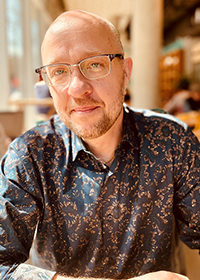 Jesper Sjöström, PhD, is a professor in the Department of Neurology and Neurosurgery and the Department of Medicine at McGill University. He is a recipient of UK MRC Career Development, CIHR New Investigator, and FRQS Chercheur-Boursier awards. His team explores plasticity in the brain using multiple patch-clamp, optogenetics, computer modelling, and custom 2-photon laser-scanning microscopy. His research has unveiled plasticity learning rules, neocortical connectivity patterns, and unorthodox forms of NMDA receptor signalling, which has had implications for Alzheimer disease and epilepsy research. Current and past leadership roles include Chair of the Montreal General Hospital Facility Animal Care Committee, Society for Neuroscience Theme B Chair, and Chief Editor of Frontiers in Synaptic Neuroscience. Dr. Sjöström's findings and novel ideas have been published in journals such as the Neuron, Nature, Nature Neuroscience, eLife, Frontiers, and Current Opinion in Neurobiology. His work has received support from the European Union, the UK Medical Research Council (MRC), the Canadian Institutes of Health Research (CIHR), Natural Sciences and Engineering Research Council of Canada (NSERC), and the Fonds de recherche du Québec (FRQ). Jesper Sjöström, PhD, is a professor in the Department of Neurology and Neurosurgery and the Department of Medicine at McGill University. He is a recipient of UK MRC Career Development, CIHR New Investigator, and FRQS Chercheur-Boursier awards. His team explores plasticity in the brain using multiple patch-clamp, optogenetics, computer modelling, and custom 2-photon laser-scanning microscopy. His research has unveiled plasticity learning rules, neocortical connectivity patterns, and unorthodox forms of NMDA receptor signalling, which has had implications for Alzheimer disease and epilepsy research. Current and past leadership roles include Chair of the Montreal General Hospital Facility Animal Care Committee, Society for Neuroscience Theme B Chair, and Chief Editor of Frontiers in Synaptic Neuroscience. Dr. Sjöström's findings and novel ideas have been published in journals such as the Neuron, Nature, Nature Neuroscience, eLife, Frontiers, and Current Opinion in Neurobiology. His work has received support from the European Union, the UK Medical Research Council (MRC), the Canadian Institutes of Health Research (CIHR), Natural Sciences and Engineering Research Council of Canada (NSERC), and the Fonds de recherche du Québec (FRQ). Program Co-leader
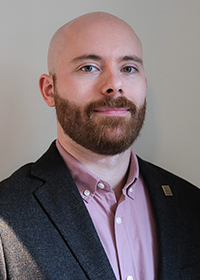 Alex Baldwin, PhD, is an Assistant Professor in the Department of Ophthalmology & Visual Sciences at McGill University. He received his PhD from Aston University (Birmingham, UK), following a BSc from Keele University (Keele, UK). His research investigates the processing of visual information by the brain. He is interested in both how this occurs in healthy vision, and in how it differs in diseases such as amblyopia (“lazy eye”) and visual snow syndrome. He has used psychophysical methods and mathematical models to investigate the mechanisms underlying visual function. For example, the perception of depth from stereopsis and the integration of contours to define boundaries in the visual input. He has also characterised how this processing can be altered through visual plasticity. Based on this research, he has developed digital tools and interventions for clinical and further research applications. This work has benefited from collaboration with Ubisoft, Novartis, the Blue Zoo Animation Studio, and the BBC. He co-leads an axis of the provincial Réseau Santé Numérique, which supports research on digital health interventions in Quebec. He is also a founding member of an upcoming centre (based at the Montreal General Hospital) that will support research and development of Digital Brain Therapies. He serves on the editorial board of the open access journal Scientific Reports. He is also a Director at the Whitearn Foundation, which funds research, clinical resources, and rehabilitation for ophthalmic disease and visual impairment across Canada. Alex Baldwin, PhD, is an Assistant Professor in the Department of Ophthalmology & Visual Sciences at McGill University. He received his PhD from Aston University (Birmingham, UK), following a BSc from Keele University (Keele, UK). His research investigates the processing of visual information by the brain. He is interested in both how this occurs in healthy vision, and in how it differs in diseases such as amblyopia (“lazy eye”) and visual snow syndrome. He has used psychophysical methods and mathematical models to investigate the mechanisms underlying visual function. For example, the perception of depth from stereopsis and the integration of contours to define boundaries in the visual input. He has also characterised how this processing can be altered through visual plasticity. Based on this research, he has developed digital tools and interventions for clinical and further research applications. This work has benefited from collaboration with Ubisoft, Novartis, the Blue Zoo Animation Studio, and the BBC. He co-leads an axis of the provincial Réseau Santé Numérique, which supports research on digital health interventions in Quebec. He is also a founding member of an upcoming centre (based at the Montreal General Hospital) that will support research and development of Digital Brain Therapies. He serves on the editorial board of the open access journal Scientific Reports. He is also a Director at the Whitearn Foundation, which funds research, clinical resources, and rehabilitation for ophthalmic disease and visual impairment across Canada. Program Manager
 Alexandra Kindrat, PhD, holds a doctorate in Education from Concordia University, where her research focused on metacognition, memory, transfer and learning in STEM. She also holds a Master of Science in Neurology and Neurosurgery from McGill University, as well as a Master of Science in Human Space Flight from the International Space University in Strasbourg, France. She has conducted research on the effects of microgravity on astronauts’ visual perception at the International Space Station and at NASA’s Johnson Space Center within the Human Health and Performance Directorate in Houston, Texas. At The Institute, Alexandra plays a pivotal role by advancing key initiatives within the Centre for Brain Digital Therapies and serving on the EDI Advisory Committee. Her leadership also extends to the broader scientific community, where she serves as President of the Society for Neuroscience’s Montreal Chapter. She is certified in Management and Leadership from Harvard Business School and has been recognized for her work by the American Institute of Aeronautics and Astronautics and the Canadian Association of Research Administrators. She was named as a Notable Concordian and received the John F. Lemieux Medal from Concordia University in recognition of her pioneering interdisciplinary contributions to neuroscience, education, aerospace research, and public service. Alexandra Kindrat, PhD, holds a doctorate in Education from Concordia University, where her research focused on metacognition, memory, transfer and learning in STEM. She also holds a Master of Science in Neurology and Neurosurgery from McGill University, as well as a Master of Science in Human Space Flight from the International Space University in Strasbourg, France. She has conducted research on the effects of microgravity on astronauts’ visual perception at the International Space Station and at NASA’s Johnson Space Center within the Human Health and Performance Directorate in Houston, Texas. At The Institute, Alexandra plays a pivotal role by advancing key initiatives within the Centre for Brain Digital Therapies and serving on the EDI Advisory Committee. Her leadership also extends to the broader scientific community, where she serves as President of the Society for Neuroscience’s Montreal Chapter. She is certified in Management and Leadership from Harvard Business School and has been recognized for her work by the American Institute of Aeronautics and Astronautics and the Canadian Association of Research Administrators. She was named as a Notable Concordian and received the John F. Lemieux Medal from Concordia University in recognition of her pioneering interdisciplinary contributions to neuroscience, education, aerospace research, and public service. |
