
Randomized study identifies a more reliable one-stop diagnostic method
SOURCE: The Institute
October 30, 2025
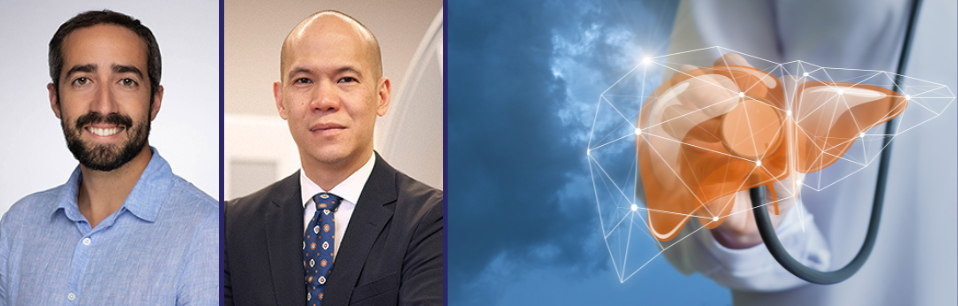
A new study led by Amine Benmassaoud, MD, and Yen-I Chen, MD, has shown that endoscopic ultrasound (EUS) is superior to the traditional transjugular approach in the evaluation of liver disease and portal hypertension. The findings, published in Clinical Gastroenterology and Hepatology, stem from the first randomized trial to directly compare both techniques in real-world clinical settings.
A more effective and efficient approach
For more than six decades, the transjugular technique—requiring venous access through the neck—has been the standard of care for staging portal hypertension and obtaining liver biopsies. However, it is technically demanding, time-consuming and often yields biopsy samples of inconsistent quality.
In this randomized study, 58 patients were evaluated with chronic liver disease at the McGill University Health Centre. Half underwent the transjugular hepatic venous pressure gradient and biopsy, while the others received EUS-guided portal pressure gradient and biopsy.
Using the AASLD criteria to define adequacy, the EUS approach produced adequate liver biopsies in 93 percent of patients, compared with only 41 percent using the transjugular method. Reliable portal pressure readings were achieved in nearly 90 percent of EUS procedures versus 59 percent with the traditional approach. Overall, the success rate for EUS was twice as high, and procedures were faster with higher patient satisfaction and no increase in adverse events.
"These findings highlight endoscopic ultrasound as a superior and patient-preferred one-stop approach for evaluating portal hypertension and liver fibrosis," said lead author Dr. Benmassaoud. "It allows us to obtain key diagnostic information in a single, minimally invasive procedure—improving patient comfort and procedural efficiency while maintaining reliability." While the use of EUS constitutes a major advancement, some patients will still be better served by the usual transjugular approach, especially in cases with very low platelets or issues with coagulation.
Better outcomes for patients
Advanced liver disease is the fifth leading cause of death among Canadians aged 35 to 64. By combining liver biopsy and portal pressure measurement in one minimally invasive procedure, the EUS approach could streamline care, reduce costs and improve patient experience.
Looking ahead
The research team now plans to study whether EUS can also predict complications related to liver disease and monitor treatment response—further expanding its role in patient management.
About the publication
The article "EUS-Guided Liver Biopsy and Portal Pressure Measurement Compared to Transjugular Approach: A Randomized Controlled Trial" was authored by Amine Benmassaoud, Ali Bessissow, Gordan Samoukovic, Philip Wong, Xun Zhao, Marc Deschenes, Giada Sebastiani, Tatiana Cabrera, David Valenti, Louis-Martin Boucher, Jean-Pierre Pelage, Karl Muchantef, Andres Cardenas, Mary Anne Givis, Sheryl White, Guillaume Bousquet-Dion, Catherine Waked, Jeremie Jacques, Elham Rahme, Olivia Geraci, Myriam Martel, Alan Barkun, Chelsea Maedler-Kron, and Yen-I Chen, and published in Clinical Gastroenterology and Hepatology (2025).
This study was supported by the McGill University Department of Medicine, the MUHC Foundation, and the Fonds de recherche du Québec – Santé (FRQS).