
Maziar Divangahi and David Labbé part of largest CIHR-led investment in cancer prevention
SOURCE: Research Institute of the McGill University Health Centre (The Institute)
March 3, 2026
Researchers at the Research Institute of the McGill University Health Centre (The Institute) are contributing to projects supported by $4 million in federal funding through the largest Canadian Institutes of Health Research (CIHR)-led investment in cancer prevention to date — a national initiative focused on reducing cancer risk and improving early detection.
The funding comes through CIHR’s Bringing Biology to Cancer Prevention Team Grants program, which is distributing more than $41 million to 19 research teams across Canada over five years. Led by CIHR in partnership with the Terry Fox Research Institute, the Canadian Cancer Society, the Japan Agency for Medical Research and Development, the Cancer Research Society and BioCanRx, the program is designed to accelerate research that translates biological discovery into measurable advances in cancer prevention.
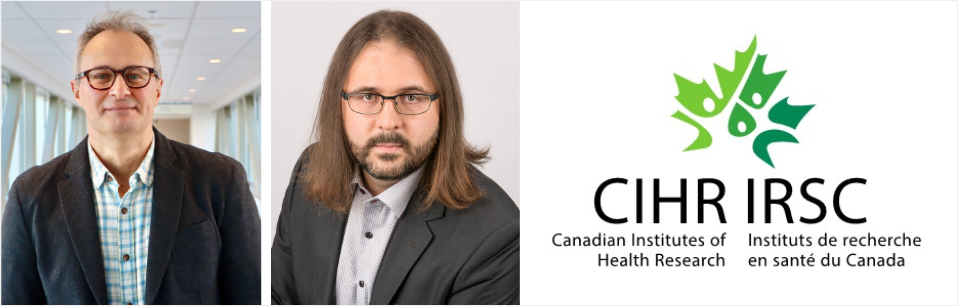
Among the funded investigators is Maziar Divangahi, PhD, a senior scientist in the Translational Research in Respiratory Diseases Program at The Institute. His project, Unlocking the Power of Trained Immunity in Cancer, has been awarded $2 million over five years, including $1.5 million from CIHR and $500,000 from BioCanRx.
Divangahi’s research examines the biological mechanisms that influence cancer development, with a focus on how immune responses and microbial signals shape disease risk. By advancing understanding of trained immunity — the immune system’s ability to develop memory-like responses — the work aims to inform new prevention strategies and enable earlier, biology-driven interventions.
The Institute is also contributing to a second funded project led by Vincent Fradet, MD, PhD, of Université Laval. David Labbé, PhD, a scientist in the Cancer Research Program at The Institute, is co-principal investigator on the five-year, $2 million study titled Harnessing the gut microbiome–prostate cancer crosstalk to discover predictive biomarkers of risk and potential preventive strategies.
The project will examine the two-way relationship between the gut microbiome and prostate cancer. The research team will investigate how bacterial communities differ among men at various stages of disease and among those at elevated risk, with the goal of identifying microbial signatures that could help predict cancer development and aggressiveness. The study will also assess how lifestyle factors, including diet, may influence these microbial patterns and cancer risk.
Cancer remains the leading cause of death in Canada and is estimated to cost the health-care system, patients and families nearly $37.7 billion annually. Research indicates that up to 40 per cent of cancer cases could be prevented through changes in lifestyle and environmental factors, supported by effective prevention strategies and early detection.
Through this national investment, The Institute researchers are contributing to research that aims to translate biological discovery into tangible advances in cancer risk reduction and early detection.
Related news
Government of Canada and partners invest over $41M to advance cancer prevention research and improve early detection (CIHR News release)
The Canadian Institutes for Health Research and Canadian Thoracic Society honour Maziar Divangahi